Description
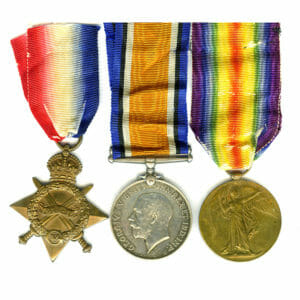
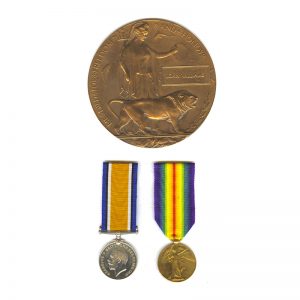
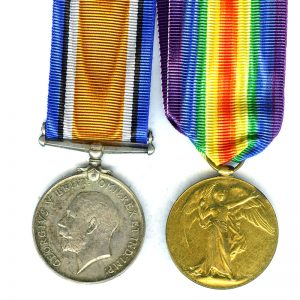
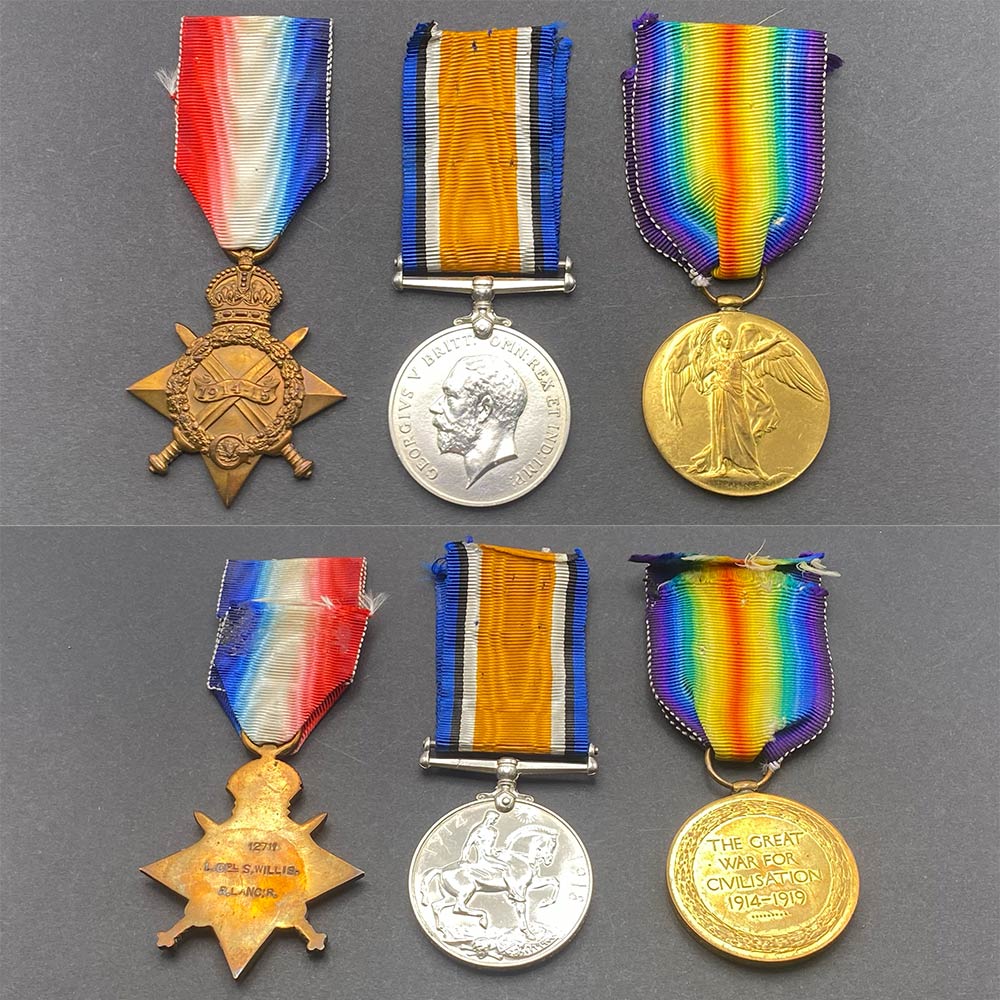
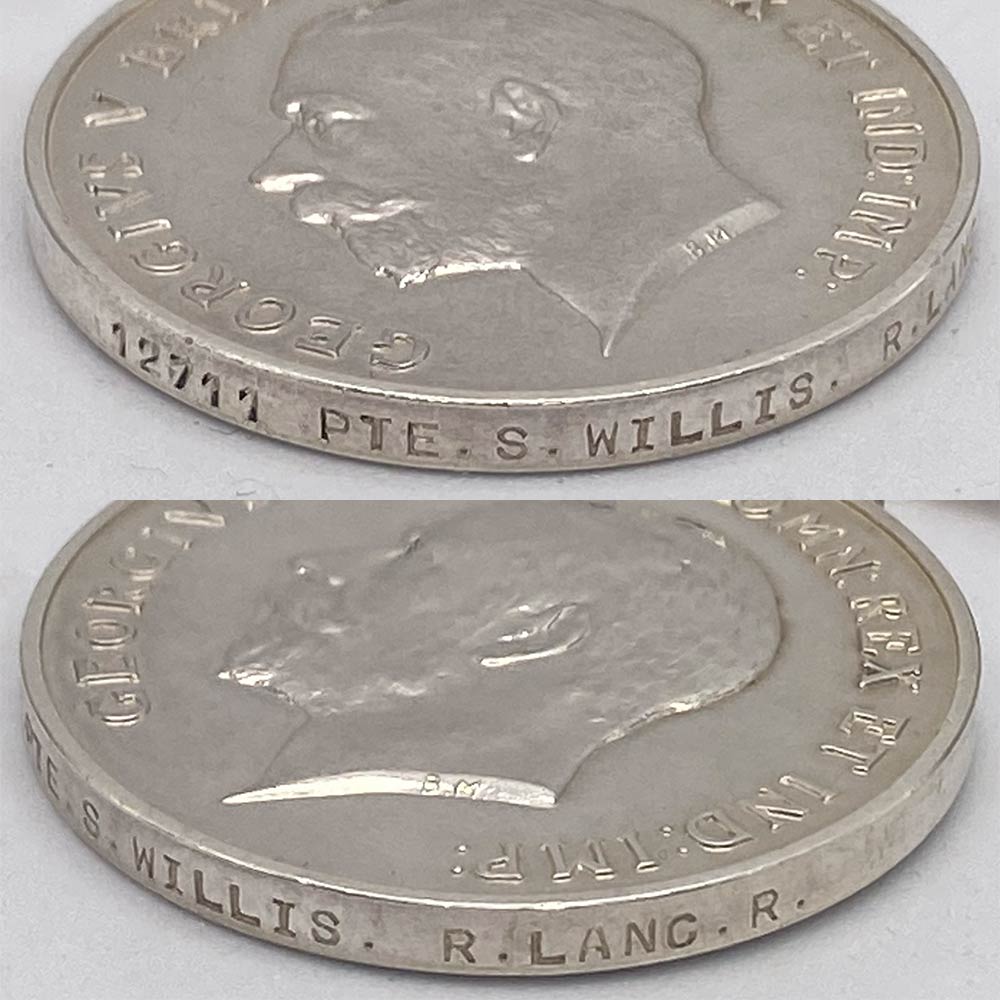
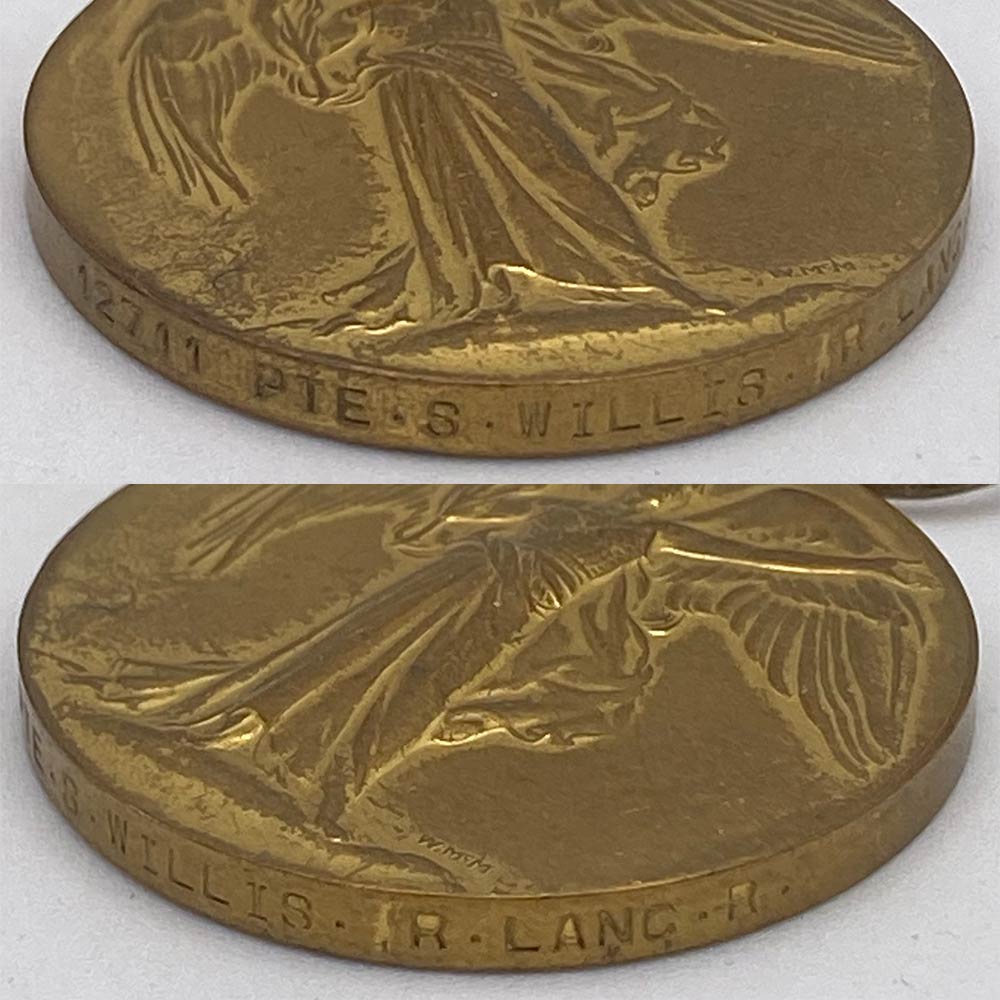
1914-15 Star, British War and Victory Medal, 12711 Private Samuel Duncan Willis, 6th Bn King’s Own Royal Lancaster Regiment. Killed in Action on 10th August 1915 in Gallipoli
1914-15 Star officially impressed: “12711 L. Cpl S. Willis. R. Lanc: R.”
WW1 Pair officially impressed: “12711 Pte S. Willis. R. Lanc. R.”
Samuel Duncan Willis was born in Atherton, Manchester during 18775.
The son of Duncan and Elizabeth Willis.
He was at the time of his death the husband of Mary Willis, of 672 Blackburn Road, Bolton.
His father Duncan came from Liverpool to Atherton where he spent most of his life as a “Secretary to a Cotton Spinning Company”, Samuel would also work in the mills with his father, starting off as a 15 year old “Office Boy” in 1891 to becoming “Salesman to a Cotton Spinning Company” by 1901.
Before the war he had moved to Sedgley Park in Prestwich, North Manchester, where he was a Cotton Yarn Agent living with his wife Marion, 2 children and a servant.
He is now commemorated in Bolton Road Methodist Church in his home town of Atherton, Greater Manchester.
Samuel seemed to have a comfortable career in the cotton industry and was about 40 years old when the war broke out.
The 6th (Service) Battalion King’s Own Royal Lancaster Regiment was raised on 9th August 1914 in Lancaster, following months waiting in England, they embarked for Egypt first on 13th June 1915 before arriving in Gallipoli on 6th July 1915, to join the 38th Infantry Brigade, 13th Division on 5th August.
Had he survived, the 6th Bn was due to be evacuated just before Christmas.
The services of their time at Gallipoli can be summaries in this section from Ray Westlake’s “British Regiments at Gallipoli” published in 1996:
“Landed Anzac 5th August and to bivouacs at Victoria Gully.
Strength – 22 officers, 722 other ranks.
Heavy shelling (6th August) – 4 killed, 40 wounded.
Moved forward via Reserve Gully to Overton Gully about 12 noon (7th August).
Later moved forward in support of Australian troops at Damakjelik Bair.
Lt. N. T. Worthington fatally wounded. Enemy attacked about 4.45 am (9th August) – came under heavy fire from Abdul Rahman Spur.
Majors R. L. Carnegy, W. Sandbach, Lt. C. L. Mere and 2nd Lt. R. D. Scolfield killed; 2nd Lts. F. A.H. Freke-Evans & R. Marsden wounded.
Turks driven back with heavy losses by 8 am.
War Diary notes casualties caused through trench not being deep enough and parapet not bullet proof. Heavy enemy machine gun fire and sniping kept up throughout the day.
Relieved at 4 pm and to 39th Brigade HQ at Aghyl Dere.
Soon after arrival, two companies sent back to Damakjelik Bair to assist 4th South Wales Borderers and Australians.
Moved forward to The Farm (10th August). Enemy engaged – CSM G. H. Jones noted in records for his leadership. At Damakjelik Bair enemy counter-attack held off. Capt. H. E. P. Higgins, Lts. S. G. Jurgens (mortally wounded) and D. G. Lloyd-Williams Killed. Other ranks casualties (9th/10th) – 45 Killed, 150 wounded, 50 missing. Battalion collected in support trenches.”
It looks like he met his death in the attack on 10th August 1915 whilst fighting off the enemy at Damakjelik Bair, the 6th Bn taking heavy casualties from the 9th – 10th August.